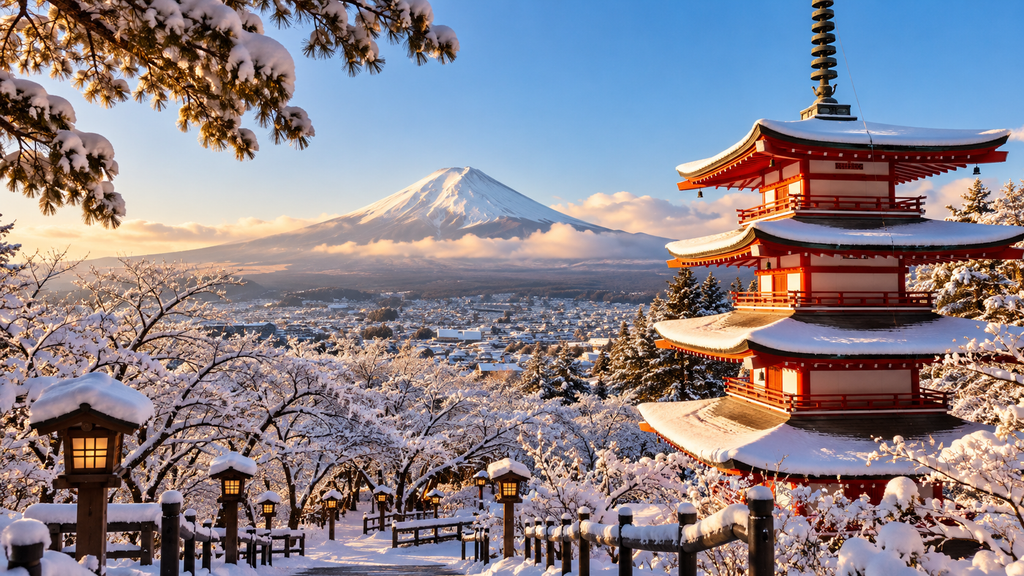
January is one of the most distinctive times to travel in Japan. Tokyo, Kyoto and Osaka are cold but often relatively dry, while Hokkaido, the Japanese Alps and the Sea of Japan side of the country can be covered in deep snow.
It is also a month with two very different personalities. The first few days of January coincide with Japan’s important New Year holiday period, when domestic travel is busy and some businesses and attractions close. Once that period ends, much of the country settles into a quieter winter rhythm.
For travellers who don’t mind cold weather, January can be an excellent month for sightseeing. It is particularly attractive if you want snow, skiing, onsen, winter scenery or generally lighter sightseeing crowds than during Japan’s spring and autumn peaks.
If you’re still deciding whether winter is right for your trip, start with our 👉 Best Time to Visit Japan guide for a season-by-season comparison.
Quick Answer: Is January a Good Time to Visit Japan?
January can be an excellent time to visit Japan, particularly for travellers who prefer cooler weather, winter scenery and fewer crowds at major sightseeing destinations.
Tokyo, Osaka and much of southern and Pacific-side Japan are cold but not normally buried in snow. January’s average temperature is around 5°C in Tokyo and 6°C in Osaka, while Sapporo in Hokkaido averages below freezing.
January is also one of Japan’s prime skiing and snowboarding months. Snowfall is generally well established across the major ski regions, with January and February forming the heart of the Japanese ski season.
The major caveat is New Year. The period around January 1 is unusually busy for domestic travel, and some museums, restaurants, shops and attractions close for part of the holiday period.
If you’re primarily interested in sightseeing rather than New Year celebrations, arriving after the first week of January can make the trip easier to plan.
For a broader look at the season, see our 👉 Japan Winter Guide: Snow, Onsen & Hokkaido Highlights.
Japan in January at a Glance
| Factor | What to Expect |
|---|---|
| Weather | Cold winter conditions with major regional differences |
| Tokyo | Cold, often dry and sunny |
| Kyoto & Osaka | Cold, particularly mornings and evenings |
| Hokkaido | Very cold with substantial snow |
| Japanese Alps | Major snow and ski season |
| Snow in Tokyo | Possible, but don’t plan a trip expecting it |
| Skiing | One of the best periods of the season |
| Crowds | Very busy around New Year; generally easier afterward |
| Prices | Highly destination-dependent; ski resorts can be expensive |
| Daylight | Shorter sightseeing days |
| Best for | Skiing, snow, onsen, winter scenery and city sightseeing |
| Main drawback | Cold weather and New Year disruptions |
What Is the Weather Like in Japan in January?
The biggest mistake when planning a January trip is treating “Japan weather” as a single climate.
Japan stretches a considerable distance from snowy Hokkaido in the north to subtropical Okinawa in the south. January can therefore mean heavy snowfall and temperatures below freezing in one destination while another part of the country remains relatively mild.
Northern regions frequently experience snow, while the major cities on Japan’s Pacific side generally receive much less. Okinawa remains substantially warmer.
That means a traveller visiting Tokyo, Kyoto and Osaka needs to prepare for a very different holiday from someone heading to Sapporo or a ski resort.
Average January Temperatures Around Japan
| Destination | Approximate January Mean |
|---|---|
| Sapporo | -3°C |
| Sendai | 2°C |
| Niigata | 3°C |
| Nagoya | 5°C |
| Tokyo | 5°C |
| Hiroshima | 5°C |
| Osaka | 6°C |
| Fukuoka | 7°C |
| Kagoshima | 9°C |
| Naha, Okinawa | 17°C |
These are monthly averages rather than the temperature you should expect at midday.
Daytime temperatures in Tokyo and Osaka can climb considerably higher on sunny days, while mornings and nights feel much colder.
The table mainly demonstrates why packing for Tokyo and Sapporo as though they have the same winter climate doesn’t work.
Tokyo in January
Tokyo is cold in January, but the city’s winter weather can actually be quite good for sightseeing if you dress appropriately.
Typical January daytime highs are around 10°C, with nighttime temperatures only a few degrees above freezing. Tokyo also tends to experience a relatively high proportion of sunny winter days.
That makes January particularly useful for travellers whose priorities are neighbourhoods, temples, observation decks, museums, shopping and food rather than gardens in bloom.
You’ll need warm layers, but you don’t normally need to plan a Tokyo holiday like a snow trip.
If Tokyo will be a major part of your itinerary, our 👉 How Many Days in Tokyo Is Enough? guide can help you decide how much of your January trip to allocate to the city.
Should You Expect Snow in Tokyo?
No. Treat snow in Tokyo as a possibility rather than a reason to visit in January.
Snow can fall in Tokyo during winter, but substantial snowfall isn’t reliable enough to build a trip around.
If seeing deep snow is important, include a proper snow destination rather than hoping Tokyo receives a lucky snowfall.
Nagano, Niigata and Hokkaido are much more sensible choices.
Kyoto in January
Kyoto can feel particularly cold because a large part of a typical visit involves being outside: walking through temple grounds, shrines, historic streets and gardens.
The advantage is atmosphere.
January gives you the opportunity to experience Kyoto outside its famous cherry-blossom and autumn-foliage periods. Once the New Year rush subsides, sightseeing can feel considerably different from the city’s busiest seasons.
Don’t assume every famous Kyoto attraction will be deserted, though. Kyoto remains one of Japan’s major tourism destinations throughout the year.
Early starts still make sense at places such as Fushimi Inari and Kiyomizu-dera.
If you’re planning your Kyoto portion now, 👉 How Many Days in Kyoto Is Enough? will help you decide whether to allocate two, three or more days.
You can also use our 👉 Kyoto 2 Day Itinerary if you’re trying to keep a winter trip compact.
Osaka in January
Osaka is slightly warmer on average than Tokyo, with an average January temperature of roughly 6°C.
January works particularly well for travellers interested in food and urban sightseeing because a significant part of an Osaka trip can be moved indoors when the weather becomes uncomfortable.
Areas such as Namba, Dotonbori and Umeda are therefore easy to incorporate into a winter itinerary.
If you’re combining Tokyo, Kyoto and Osaka on a first Japan trip, January does not require completely redesigning the classic route.
You primarily need to adjust your clothing, daylight expectations and the amount of time you spend outdoors.
For help deciding how long to stay, see 👉 How Many Days in Osaka Is Enough?
Hokkaido and Sapporo in January
This is where January becomes a genuine winter trip.
Sapporo’s average January temperature sits below freezing, and snow and ice become part of everyday travel rather than an occasional weather event.
That means your footwear becomes much more important. A pair of fashionable city shoes that works perfectly well in Tokyo may be uncomfortable or unsafe on icy streets in Hokkaido.
Travellers deliberately seeking snow should strongly consider northern Japan rather than trying to build their trip around the possibility of snowfall farther south.
Our 👉 Hokkaido Travel Guide covers the region in much more detail.
Sapporo can also work as a base for travellers wanting food, nightlife and winter-city experiences alongside their snow activities. See our 👉 Sapporo Travel Guide if you’re considering adding the city.
Where Can You See Snow in Japan in January?
January is one of the easiest months of the year to incorporate reliable snow into a Japan itinerary.
The important distinction is between seeing snow and hoping it snows in the major cities.
For reliable winter conditions, consider:
- Hokkaido
- Nagano
- Hakuba
- Nozawa Onsen
- Shiga Kogen
- Niigata
- the Japanese Alps
- other higher-elevation and Sea of Japan destinations
Best Choice If You Want Snow Without Flying to Hokkaido
Nagano is particularly useful for travellers already visiting Tokyo.
It allows you to add genuine snow-country experiences without flying to another island. Hakuba, Nozawa Onsen and Shiga Kogen are among the region’s major winter destinations.
For a first-time visitor doing Tokyo–Kyoto–Osaka, adding several nights in Nagano can create a completely different experience without requiring an entirely separate Hokkaido itinerary.
This is also where luggage planning becomes important. Dragging large suitcases through snowy resort towns is considerably less enjoyable than moving them between Tokyo and Kyoto.
Consider using luggage delivery for the city portion of the trip while taking a smaller bag into the mountains. Our 👉 Luggage Forwarding in Japan Guide explains how the system works.
Is January Good for Skiing in Japan?
Yes. January is one of the key months of Japan’s ski season.
Japan’s ski season generally runs from December into spring, although opening and closing dates vary significantly according to location, altitude and snowfall.
January and February tend to offer some of the most consistent snow conditions.
Two of the most obvious regions for international visitors are:
Hokkaido
Hokkaido makes particular sense for travellers making skiing or snowboarding the main purpose of their trip.
Major ski areas receive substantial winter snowfall, and the region provides the full snow-country experience rather than simply a day or two in the mountains.
Nagano and the Japanese Alps
Nagano is easier to integrate with a Tokyo and central-Japan itinerary.
Hakuba is particularly significant, with multiple ski areas and straightforward access compared with more remote Japanese resorts.
There is an important trade-off, however:
Good snow does not mean low prices or low crowds.
January may be relatively quiet for conventional sightseeing after New Year, but ski destinations operate on a completely different demand pattern.
If skiing is a major part of your trip, reserve accommodation substantially earlier than you might for an ordinary January city break.
How Crowded Is Japan in January?
January needs to be divided into two very different periods.
Early January: Expect New Year Crowds and Disruption
New Year is one of Japan’s major holiday periods.
Domestic travel increases substantially as people travel to see family or take holidays.
Shrines and temples can also become extremely busy because of hatsumode, the traditional first shrine or temple visit of the year.
This is not necessarily a reason to avoid Japan.
In fact, experiencing Japanese New Year can be one of the reasons to come.
But it requires different planning.
After New Year: Much Easier Sightseeing
Once the New Year period ends, January becomes considerably more attractive for conventional sightseeing.
Tokyo, Kyoto and other major destinations can be less crowded than during famous spring and autumn periods.
That makes approximately the second week onward particularly interesting for travellers whose priorities are Tokyo, Kyoto and Osaka rather than experiencing New Year itself.
Ski Areas Are the Exception
Do not apply the same crowd logic to ski resorts.
January is peak snow season.
Popular resorts can be busy even when conventional sightseeing destinations are comparatively quiet.
If you want to combine both experiences, one useful strategy is to spend weekdays in the ski resorts and weekends in the major cities where possible.
What Happens in Japan During New Year?
New Year is one of the most culturally interesting but logistically unusual times to visit Japan.
Many Japanese people travel to visit family, while temples and shrines receive large numbers of visitors.
The problem for international travellers is closures.
Some museums, attractions, restaurants and stores close for one or more days around New Year.
Temples and shrines, on the other hand, naturally become central to New Year activities.
The practical lesson is simple:
Do not build a January 1 itinerary assuming everything operates like an ordinary day.
Check every important attraction and restaurant individually.
If your dream restaurant, museum or experience is central to the trip, verify its New Year operating dates before finalising the itinerary.
Is January Cheaper for Visiting Japan?
It can be, but calling January universally “cheap” is misleading.
There are effectively several different January travel markets.
Major Cities After New Year
Tokyo, Kyoto and Osaka can offer attractive conditions because January sits outside the famous cherry-blossom and autumn-foliage peaks.
New Year
Demand and domestic travel patterns can increase prices and reduce availability.
Ski Destinations
January is peak season, so popular resorts can command premium accommodation prices.
The useful strategy is therefore not simply:
“Visit Japan in January to save money.”
Instead, consider January for value if your trip is primarily Tokyo, Kyoto, Osaka and other non-ski destinations after the New Year period.
For a broader idea of what you’ll spend, see 👉 Is Japan Expensive? Full Japan Trip Cost Breakdown.
Best Places to Visit in Japan in January
The right destination depends heavily on what you want January to add to your trip.
Tokyo — Best for an Easy First Winter Trip
Choose Tokyo if you want city sightseeing without designing the entire holiday around snow.
January’s relatively dry Pacific-side winter weather can work well for long sightseeing days, provided you’re dressed for the cold.
If this is your first visit, our 👉 Best Things to Do in Tokyo guide will help you prioritise your days.
Kyoto — Best for Winter Atmosphere
Choose Kyoto if temples, shrines and historic neighbourhoods are central to your trip.
The compromise is that much of Kyoto sightseeing takes place outdoors, so cold weather matters more here than it does during an indoor-heavy Tokyo day.
Use 👉 Best Things to Do in Kyoto to decide which attractions deserve your limited winter daylight.
Osaka — Best for Food and Indoor/Outdoor Flexibility
Osaka works particularly well if food is a major priority.
Cold weather is easier to manage when you can alternate neighbourhood exploration with restaurants, shopping and indoor attractions.
Food-focused travellers should also see 👉 Osaka Food Guide: What to Eat & Where to Find It.
Nagano — Best for Adding Snow to a Classic Itinerary
Nagano is one of the smartest additions to a Tokyo–Kyoto–Osaka trip if you specifically want snow.
You can experience skiing, mountain scenery and onsen without making Hokkaido an entirely separate leg.
Hokkaido — Best for a True Winter Holiday
Choose Hokkaido if snow isn’t just a bonus but one of the main reasons you’re visiting Japan.
The trade-off is that this changes the logistics and packing requirements of your trip considerably.
Okinawa — Best If You Dislike Cold Weather
Okinawa offers the opposite January experience.
Average January temperatures in Naha are dramatically warmer than Tokyo and especially Hokkaido.
However, January isn’t the obvious choice if your idea of Okinawa is primarily a hot tropical beach holiday.
What Should You Wear in Japan in January?
For the classic Tokyo–Kyoto–Osaka route, think in layers rather than expedition clothing.
A practical packing setup includes:
- warm outer coat
- sweaters or fleece layers
- long trousers
- thermal base layers if you feel the cold
- comfortable closed walking shoes
- warm socks
- scarf
- gloves
- compact umbrella
- lip balm and moisturiser
Japanese buildings, trains and shops are generally heated, so being able to remove layers is useful.
If you’re heading to Hokkaido or mountain resorts, upgrade your clothing accordingly.
Waterproof footwear with appropriate grip becomes considerably more important when you’re walking through snow and ice.
For your complete pre-trip packing checklist, see 👉 Japan Packing List: What to Bring for Your Trip.
Does January Work for a First Trip to Japan?
Yes. January can work extremely well for a first Japan trip.
You don’t need to replace Tokyo, Kyoto and Osaka simply because it is winter.
A first-time visitor could still follow something close to:
Tokyo → Kyoto → Osaka
and add:
Nagano / Hakuba / Nozawa Onsen
if seeing snow is important.
That can actually produce a more varied trip than visiting only cities.
January becomes less suitable if your priorities are cherry blossoms, lush gardens, long daylight hours or consistently warm weather.
If you’re starting your Japan planning from scratch, 👉 Japan Travel Guide for First-Time Visitors walks through the process step by step.
A Practical 10-Day January Itinerary
One sensible first-trip structure would be:
Days 1–4: Tokyo
Use Tokyo as your introduction to Japan.
Mix neighbourhoods and outdoor attractions with museums, shopping and food so you’re not outside continuously.
Days 5–6: Snow Destination
Travel to Nagano, Hakuba or another mountain destination for snow, skiing or an onsen stay.
Even if you don’t ski, spending a night somewhere surrounded by snow can justify adding the region to the trip.
Days 7–8: Kyoto
Focus on temples and historic districts, starting outdoor sightseeing earlier in the day.
Avoid leaving your most important outdoor attraction until late afternoon when daylight is disappearing.
Days 9–10: Osaka
Finish with Osaka’s food districts and urban attractions.
This route gives January a purpose rather than simply tolerating the winter weather.
If snow doesn’t interest you, allocate those two mountain days to Tokyo, Kyoto or another regional destination instead.
You can compare this route with our full 👉 10 Day Japan Itinerary for First-Time Visitors.
Travelling Between Japanese Cities in January
The standard Tokyo–Kyoto–Osaka route remains easy to travel by Shinkansen during winter.
If you’ve never used Japan’s bullet trains before, see our 👉 Shinkansen Guide: How to Use Japan’s Bullet Trains.
Winter does introduce an extra consideration once you start travelling into heavy-snow regions.
Severe weather can occasionally affect trains, flights and roads. Don’t build an itinerary where a weather-related delay of an hour or two would cause you to miss an international flight.
If you’re coming out of a ski resort, leaving some buffer before your flight home is sensible.
And don’t automatically assume a nationwide JR Pass will save money.
Use our 👉 Japan Rail Pass Calculator before buying one.
Advantages of Visiting Japan in January
Winter Scenery
Northern and mountainous Japan can be transformed by snow.
If winter landscapes are part of the reason you’re visiting, January provides experiences that simply aren’t available during warmer months.
Skiing and Snowboarding
January sits within Japan’s prime snow-sports period.
This makes it particularly attractive if you’re trying to combine a conventional Japan trip with several days of skiing.
Potentially Lighter Sightseeing Crowds
Once New Year finishes, conventional sightseeing destinations can be quieter than during famous spring and autumn periods.
Onsen
Cold weather makes a hot-spring stay particularly appealing.
There is a considerable difference between visiting an onsen on a warm afternoon and sitting in an outdoor bath while the surrounding landscape is covered in snow.
If that sounds like your type of trip, see 👉 Best Onsen Ryokans in Japan.
Clear Seasonal Contrast
Combining Tokyo with somewhere such as Nagano or Hokkaido can make two parts of the same trip feel completely different.
You can be walking through central Tokyo one day and surrounded by deep snow shortly afterward.
Disadvantages of Visiting Japan in January
January isn’t automatically the right month for everyone.
Cold Weather
You may spend several hours outside every day.
This matters particularly in Kyoto, where many major attractions involve outdoor walking.
Shorter Days
Winter gives you less daylight for outdoor sightseeing.
Structure your itinerary so attractions where daylight matters most happen earlier.
New Year Closures
The beginning of January requires substantially more planning than an ordinary week.
Winter Transport Disruption
Heavy snowfall can occasionally affect transport in snow regions, so extremely tight connections are less sensible.
Expensive Ski Destinations
January is not necessarily a bargain period at Japan’s most popular snow resorts.
Less Colourful Vegetation
Outside snowy landscapes, winter scenery can appear bare compared with spring and autumn.
Who Should Visit Japan in January?
January is particularly good for:
- skiers and snowboarders
- travellers who want to see snow
- onsen trips
- repeat visitors looking for a different Japan experience
- photographers interested in winter scenery
- travellers comfortable sightseeing in cold weather
- first-time visitors who would rather avoid peak cherry-blossom and autumn periods
Consider another month if your priorities are warm evenings, gardens in bloom, cherry blossoms or long outdoor sightseeing days.
Common Mistakes When Visiting Japan in January
Assuming All of Japan Will Be Snowy
Tokyo and Osaka are not Hokkaido.
Build a proper snow destination into your itinerary if snow is important.
Underestimating New Year Closures
Check opening schedules individually if you’re travelling during the first few days of January.
Assuming January Means Cheap Ski Accommodation
January is peak ski season.
Book popular snow destinations early.
Packing One Extremely Heavy Coat but No Layers
You will repeatedly move between cold streets and heated trains, restaurants and shops.
Layers are more practical.
Ignoring Sunset
Don’t build summer-style sightseeing schedules around late-afternoon outdoor attractions.
Put places where daylight matters earlier in the day.
Trying to See Snow as a Tokyo Day-Trip Gamble
If snow is a priority, travel somewhere where winter snow is normal.
Carrying Too Much Luggage Into Snow Country
A suitcase that’s easy to roll through Tokyo Station can become extremely inconvenient on snowy streets.
Consider luggage forwarding between your major hotels and travel into the mountains with a smaller bag.
👉 Luggage Forwarding in Japan: Takkyubin Guide for Travellers
Frequently Asked Questions
Is January a Good Month to Visit Japan?
Yes. January is particularly good for snow, skiing, onsen and relatively quiet city sightseeing after the New Year holiday period.
It is less suitable for travellers who dislike cold weather or want spring vegetation.
Does It Snow in Japan in January?
Yes, but snowfall varies enormously by region.
Hokkaido, the Japanese Alps and Sea of Japan areas receive substantial snow, while Tokyo and Osaka experience much less.
Does Tokyo Get Snow in January?
Snow can occur, but you should not plan a January Tokyo trip expecting it.
Travel north or into Japan’s mountain regions if snow is an important part of your holiday.
Is Kyoto Worth Visiting in January?
Yes.
January can be an appealing period for Kyoto once the New Year period finishes, particularly for travellers comfortable sightseeing in cold conditions.
Is Japan Crowded in January?
The New Year period can be busy because of domestic travel and shrine visits.
After the holiday period, many conventional sightseeing destinations become comparatively quieter.
Ski resorts are different because January is one of their busiest periods.
Is Japan Expensive in January?
It depends where you’re travelling.
Popular ski areas can be expensive during peak season, while city travel later in January may offer better value than major seasonal tourism periods.
Can You See Mount Fuji in January?
Yes, although visibility is never guaranteed.
Winter’s generally drier conditions on the Pacific side can provide good opportunities to see Mount Fuji.
If seeing the mountain is a major priority, allow some flexibility rather than depending on a single fixed viewing opportunity.
Our 👉 Mount Fuji Day Trip Guide covers the main ways to see the mountain.
What Is the Coldest Part of Japan in January?
Northern and inland mountainous regions experience substantially colder conditions than Japan’s major Pacific-side cities.
Sapporo’s average January temperature is below freezing, compared with around 5°C in Tokyo and approximately 17°C in Naha.
Final Thoughts
January is not simply a cheaper or colder version of visiting Japan at another time of year.
It can create a fundamentally different trip.
Tokyo, Kyoto and Osaka remain practical destinations, but adding somewhere such as Nagano or Hokkaido introduces deep snow, skiing, winter onsen and landscapes you won’t experience during the warmer months.
For most first-time visitors who aren’t specifically travelling for Japanese New Year, the period after the first week of January is generally the easiest part of the month to plan. The New Year rush has subsided, major cities can be relatively comfortable for sightseeing, and Japan’s snow regions are well into their winter season.
If your ideal trip combines Tokyo and Kyoto sightseeing with snow, an onsen stay and possibly skiing, January deserves serious consideration.
And if you’re still comparing January against other times of year, continue with our 👉 Best Time to Visit Japan: Season-by-Season Guide. January is one of the most distinctive times to travel in Japan. Tokyo, Kyoto and Osaka are cold but often relatively dry, while Hokkaido, the Japanese Alps and the Sea of Japan side of the country can be covered in deep snow.
It is also a month with two very different personalities. The first few days of January coincide with Japan’s important New Year holiday period, when domestic travel is busy and some businesses and attractions close. Once that period ends, much of the country settles into a quieter winter rhythm.
For travellers who don’t mind cold weather, January can be an excellent month for sightseeing. It is particularly attractive if you want snow, skiing, onsen, winter scenery or generally lighter sightseeing crowds than during Japan’s spring and autumn peaks.
If you’re still deciding whether winter is right for your trip, start with our 👉 Best Time to Visit Japan guide for a season-by-season comparison.